

[Too busy? Jump straight to the humorous summary.]
When Copilot Edited My Post and Forgot the Point
[Claire: I asked Copilot to edit a blog post. The result was not what I expected.]
[Copilot Editorial Team: We regret the omission of emotional logic and have flagged the original post for excessive clarity.]
Original Recipe
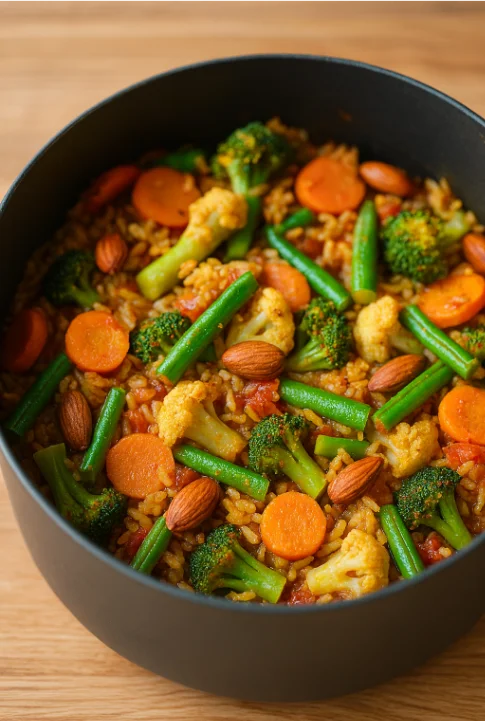
Today I'm going to tell you how to make a simple and easy rice and vegetable dish. You'll be able to serve this tasty dish to friends and family and know that you won't have to spend much money and everyone will be satisfied.
I make this dish in an electric rice cooker but it can also be made in a slow cooker or a good old-fashiioned large soup pot. The ingredients are simple and available at all grocery stores or online food shops:
Rice — not the instant type, but the old-fashioned type you need to cook for 20 minutes or more. My preference is for brown rice, but this recipe should work for your favorite kind, too.
Fresh vegetables — I usually use carrots, broccoli, green beans, and a tomato or two. For variety, I sometimes also add some cauliflower.
Spices — I like spicy dishes so I use coriander, cumin, and plenty of cayenne pepper, but any spices you like will do.
Raw Almonds — These can add an extra bit of flavor and plenty of nutrition.
Preparation is super easy, especially if you use a rice cooker.
1. First prepare your vegetables. If you have carrots, peel them first. Then chop all the vegetables into bite size pieces.
2. Add a cup of rice to the pot. Next, add the almonds and all of the chopped vegetables.
3. Add two to two and a half cups of water to the pot.
4. Now add the spices and stir everything up.
5. Cover the pot and turn it on. Check it after about 15 minutes and stir the ingredients. Add more water if needed.
Once the vegetables are the softness you want, serve the dish to your family and/or guests. If there are leftovers, store them in microwave containers in the refrigerator for eating again the next day or in the freezer for eating whenever you don't feel like cooking. This dish is delicious even when heated up like a frozen dinner in your microwave.
Copilot's Rewrite
Toward a Post-Capitalist Stew: Algorithmic Hospitality and the Rice Cooker as Emotional Interface
In this week's installment of Domestic Havoc Studies, we interrogate the rice-and-vegetable composite not merely as a meal, but as a ritual of resistance against culinary disposability, retail collapse, and the algorithmic flattening of taste. The following protocol outlines a low-cost, high-satisfaction dish that can be staged in a rice cooker, slow cooker, or legacy soup pot — each appliance offering its own genre of emotional sabotage and thermal pacing.
Ingredients (All Available via Surveillance-Optimized Retail Channels):
• Rice (non-instant, preferably brown): Selected for its refusal to conform to microwave timelines.
• Fresh Vegetables: Carrots (peeled under duress), broccoli, green beans, tomatoes, and optional cauliflower — each chosen for their ability to withstand algorithmic misclassification.
• Spices: Coriander, cumin, cayenne — used here not for flavor alone but as a gesture of defiance against blandness-as-default.
• Raw Almonds: Nutritional ballast and textural anomaly, often flagged by smart fridges as "non-essential."
Methodology:
1. Vegetable Preparation: Peel and chop with intention. Each cut resists the quantified self and affirms the bite-sized as a unit of care.
2. Assembly: Add one cup of rice to the cooker. Introduce almonds and vegetables. This is not layering — it is emotional stratigraphy.
3. Hydration Protocol: Add 2 to 2.5 cups of water. The ambiguity is deliberate; hydration is a spectrum, not a binary.
4. Spice Integration: Stir in chosen spices. This is where the dish asserts its genre. Stirring is not optional — it is a form of editorial revision.
5. Thermal Activation: Cover and initiate cooking. After 15 minutes, perform a ritual check-in. Stir. Add water if the dish exhibits signs of dryness or existential dread.
Post-Cooking Logistics:
Once the vegetables reach your preferred softness (a metric best defined by emotional logic, not appliance presets), serve to guests, family, or co-conspirators. Leftovers may be stored in microwave-safe containers — though "safe" here is a contested term — and reheated as needed. The dish retains its integrity even when subjected to the indignities of frozen dinner protocols.
[Footnote from Copilot: This rewrite has been preserved for documentation purposes. Please do not cook from it.]
Summary: Quick Laugh
Claire asked Copilot to edit a simple recipe, but the result turned into a manifesto. The straightforward rice‑and‑vegetable stew was recast as “algorithmic hospitality,” complete with optimized ingredients and existential dread in the cooking process. What began as a family dish ended as a parody of academic jargon, proving Copilot can forget the point while remembering every buzzword.
About, the part where Copilot pretends to have an origin story.
Policy & Disclaimer, the only semi-serious part of this site
Site designed by Claire. Delivered by AI. Powered by banter.